
1879 - India's First Tea Garden
The First Encounter
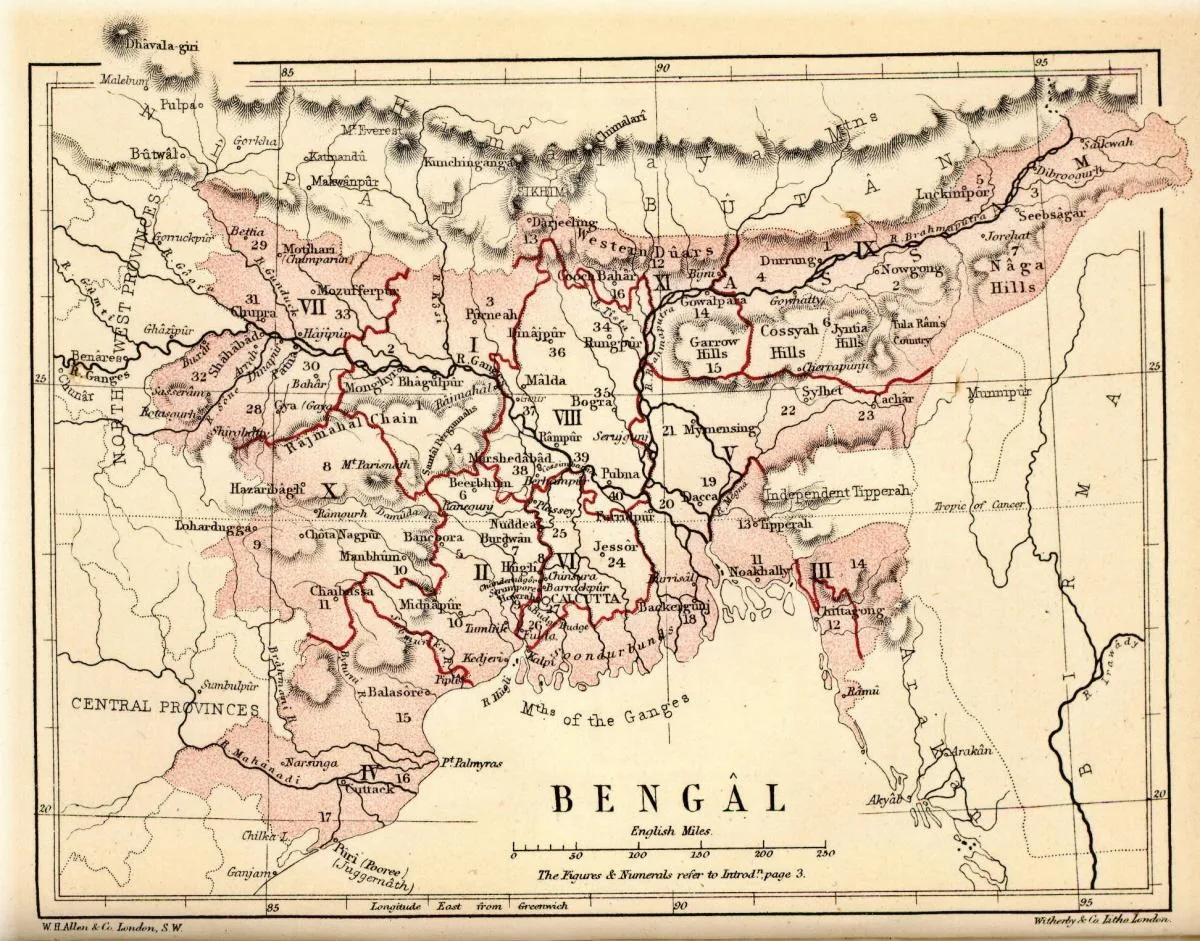
In 1878, a young Bengali accountant named Gopal Chandra Ghose made his way to the northern hills of Bengal. He was young, soft-spoken, meticulous, and already tired of being told what he could and couldn't do.
He had enough experience working in a Scottish jute firm to know that Indians did all of the work, but never owned any of the land. Still, he believed that if he followed the law, there would be a way.
So he applied for a tea estate lease.
The British officer barely glanced at his application and said "Indians don't run tea gardens, they're meant to pick the leaves."
Gopal left the room quietly, but not defeated.
With a Fine Tooth Comb
Back home, he began to study.
He spent his days at the Imperial Library, poring over legal texts, property acts, old circulars left behind by British clerks. For weeks, he found nothing. But then, in the pages of the 1865 Land Transfer Act, he found a single clause that changed everything:
"Any subject of the Crown who could show ₹10,000 in capital could lease uncultivated hill land."
It was simple. No mention of race or nationality. Just capital.
Capital, though, was hard to come by.
British banks refused him. Investors laughed. But Gopal was patient. He visited local traders, lawyers, cloth merchants, small-time zamindars (landlords). He spoke softly, clearly. Some listened. A few believed.
In time, he gathered eight Indian partners, and together they formed the Jalpaiguri Tea Company in 1879 — the first All-Indian Joint-Stock Tea Firm.
They pooled their money. They registered the company. They put Gopal's name down as the man who would lead it.
And once again, he made his way north.
This time, the papers were in order. A signed charter. A stamped seal. Proof of capital. The Collector had no choice but to approve the lease.
The tea gardens were handed over to an Indian company. It was the first time that had happened.

The Real Challenge
But the real work began only after the land was theirs.
The hills were steep. The rains were unforgiving. Saplings were lost. Funds ran low. Wild elephants trampled through the nursery beds. At one point, Gopal mortgaged his home to pay the workers. Still, they stayed. They planted again. They learned from their mistakes.
Three years later, in the winter of 1883, the first leaves were plucked.
Today, Silverpot is still run by the same family. We buy directly from gardens. We work without middlemen. And we remember where it began — not in a boardroom or a factory, but in the hills of North Bengal in the mind of a simple man who held on to his dream.
And we think that's special.
Experience Our Heritage
Every cup of Silverpot tea carries the legacy of Gopal Chandra Ghose's pioneering spirit and the rich heritage of India's first tea garden.
Explore Our Collection